There are plenty of situations where your normal EDC setup suddenly becomes a liability.
A day at the beach, a boat trip, camping, or at the water park can leave you wondering what to do with your wallet, phone, keys, and other essentials. Leaving them in a locker can be pretty sketchy.
Instead of carrying your normal wallet and full-size EDC gear, you can build a compact waterproof pocket EDC kit, specifically for these situations.
Here’s the idea: take the essentials you normally carry and replace them with smaller alternatives that fit inside a 100% waterproof case.
You probably need less than you think. Keep it simple and you might be surprised at how easy this is.
Here’s what I did to make my own waterproof kit. Your needs may be different, but this guide will be a good starting point.
This is a fun one, so let’s get into it…
Start With the Waterproof Case
The case is the foundation of the entire kit.
If you’re carrying electronics, cash, credit cards and other important items around water, a Ziploc bag won’t cut it.
Look for a compact waterproof case that will fit into your pocket. It must have a secure closure mechanism that is unlikely to open accidentally.
The case must also have a gasket to keep water out. Remember that there is a difference between waterproof and water resistant. Check the manufacturer’s specifications rather than assuming that a tight-looking lid is good enough.
Size matters just as much as waterproofing. The temptation is to buy a larger case and fill the extra space, but that defeats the purpose.
Start with the smallest case that will accommodate your essential items. A pocket EDC kit should fit comfortably into whatever you normally wear or carry.
This may require some trial and error. If possible, go to a store and try out a few cases to get a feel for sizing.
Before trusting a new case with your phone, cards, or cash, always test to see if it’s really waterproof. Even the best waterproof case makers can have a few defective units.
Put dry tissue paper inside, close the case, and expose it to water under conditions consistent with its rating. If the paper remains completely dry, you have much more confidence before putting valuable gear inside.
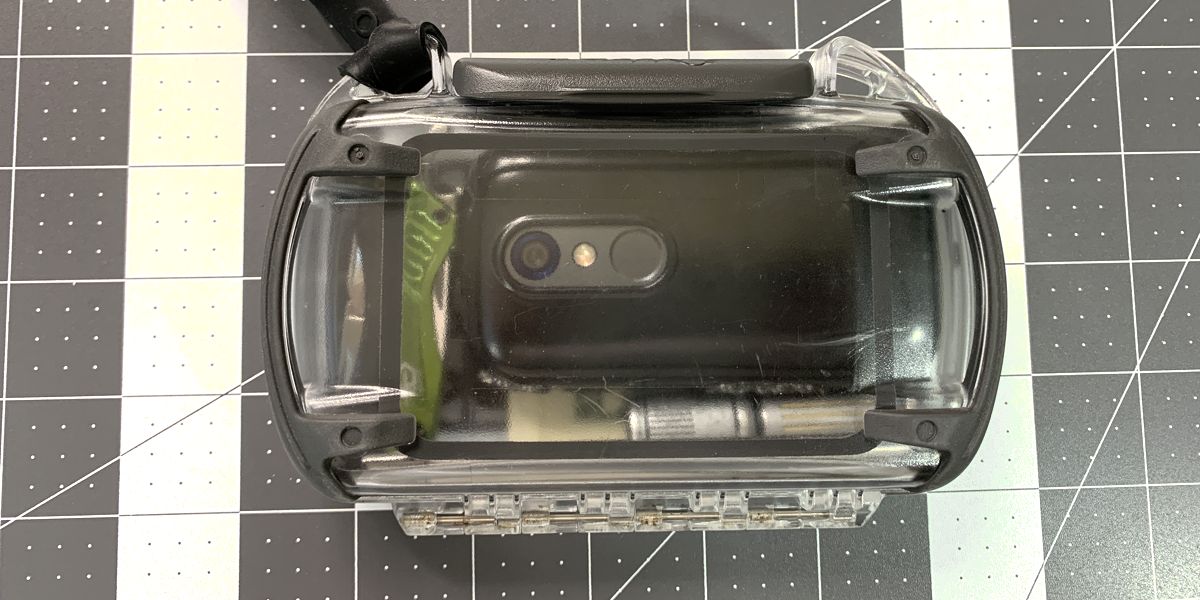
I’m using an Otterbox dry box that works perfectly and is rated waterproof down to 100 feet/30 meters. Unfortunately, Otterbox doesn’t make this model anymore. They have actually gotten out of the dry box game altogether.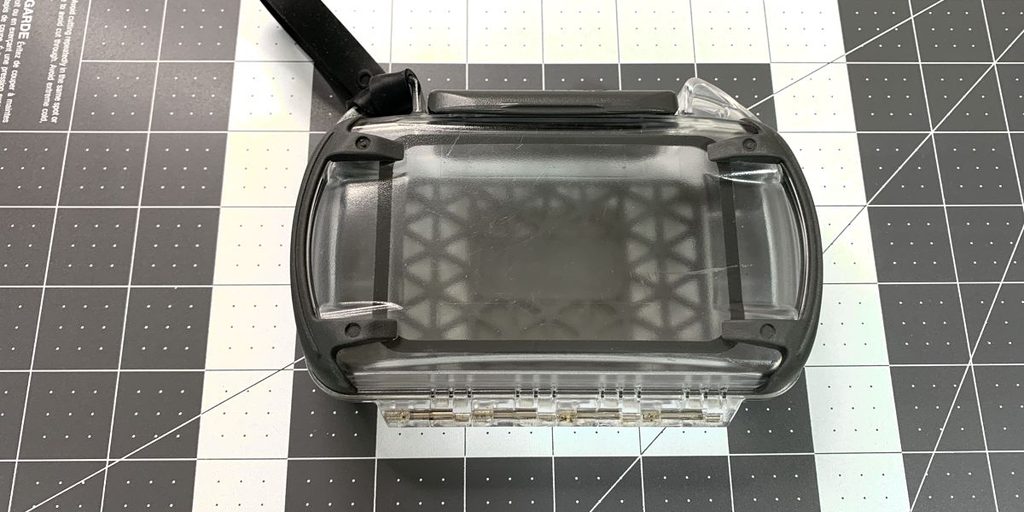
You still might be able to find an Otterbox Pursuits 20 dry box on eBay, but be sure to test it because it’s older and the parts may have deteriorated.
If you want to go brand new, there are several models available. In particular, check out the Pelican 1020 Micro Case and the Plano Guide Series 3400 on Amazon.
Unfortunately, most newer dry boxes are only rated waterproof down to 1 meter for 30 minutes. But that is usually good enough for most outings.
Look around though, there may be new models that were not available at the time this was written.
Cash and Cards: Remove the Wallet
Your regular wallet is one of the easiest EDC items to leave behind.
You probably don’t need a thick wallet containing every credit card, membership card, and loyalty card you normally carry when you’re spending an afternoon at the beach or on a camping trip.
Simply carry one payment card and your ID, plus one backup card just in case. A decent amount of cash is also a great thing to have. Many stores in rural areas still only accept cash, so be prepared.
At beaches, festivals, amusement parks, and tourist destinations, you may encounter small vendors, parking areas, lockers, or other situations where having a few physical bills is convenient. It also makes tipping much easier.
Here’s what my case looks like.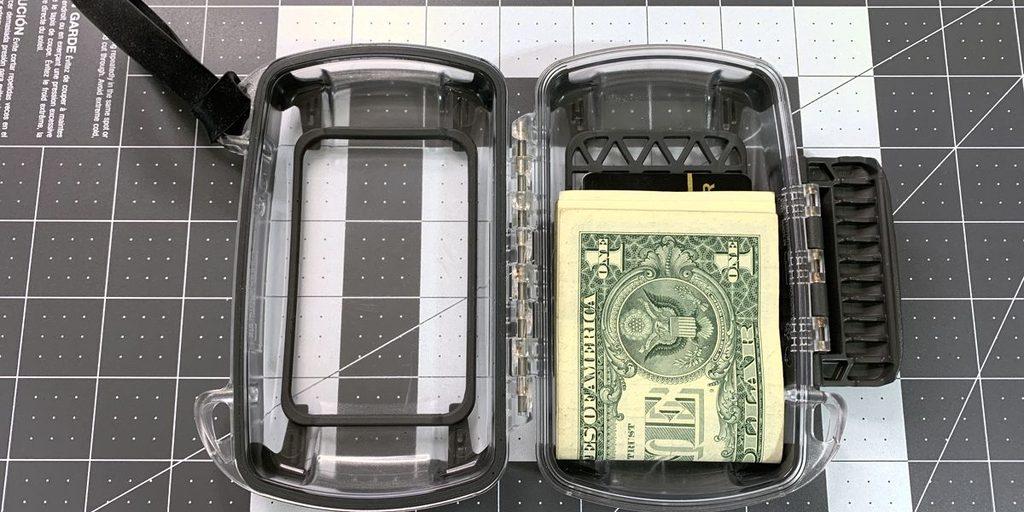
Mini Multi-Tool: Keep the Useful Tools, Lose the Bulk
A full-size multi-tool can be tremendously useful, but it can also be one of the heaviest objects in an EDC setup.
For a recreational waterproof kit, that extra size and weight usually isn’t necessary.
A keychain-sized multi-tool can provide several basic functions in a tiny package.
Depending on the design, you might get screwdrivers, scissors, tweezers, a bottle opener, a file, small pliers, or other everyday implements.
Think about the tools you’re realistically likely to use and select the smallest model that includes them.
There’s an important caveat when choosing a multi-tool for an amusement park, attraction, event venue, cruise, or other controlled location: check the rules before bringing it.
Many multi-tools contain knife blades or other implements prohibited by particular venues or transportation security rules. A bladeless mini-tool can be a much better choice when access restrictions are a concern.
This is another area where capability matters more than tool count.
A 15-function tool isn’t automatically better than a six-function model. If those six functions cover your realistic needs while taking up half the space, the smaller multi tool is better suited to this particular kit.
I like the Gerber Dime, but look around for something that works for you.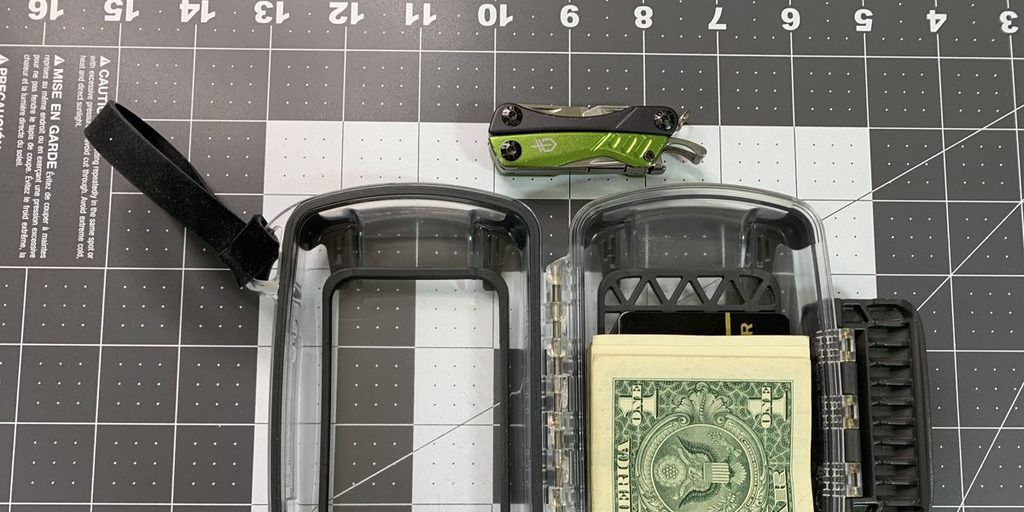
Mini Pen: Full-Sized Function in a Tiny Package
A pen might seem unnecessary until you need one.
You might have to sign a receipt, write down a phone number, fill out a form, or leave someone a note.
That’s why a pen remains one of the simplest and most useful pieces of EDC gear.
However, a conventional pen is gigantic compared to a pocket-sized waterproof case.
Fortunately, EDC pens provide the same basic function while occupying a fraction of the space.
Look for a short pen with a retractable tip. You don’t want the point exposed because it could mark other items in the case.
Although many “survival gurus” recommend pressurized pens so you can write upside down or underwater, the reality is that these pens are terrible.
And when did James Bond ever need this? Laser pens, yes. Pressurized pens…no.
Pressurized cartridges tend to leak as they get older and will mess up everything in the case.
Ask me how I know that.
I own and recommend the Pilot Birdy and the Zebra Mini. They can also easily fit into a regular folding wallet.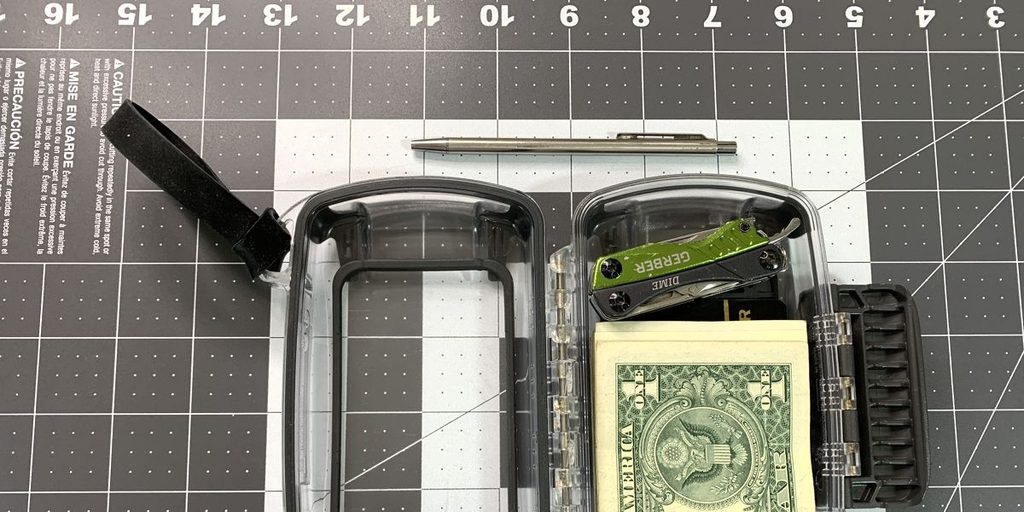
Keychain Flashlight: Light When You Need It
A flashlight deserves a place in an EDC kit even if your phone already has one.
A dedicated light doesn’t consume your phone’s battery, can be easier to operate quickly, and lets you use your phone for communication while illuminating something separately.
For a waterproof pocket kit, there’s no reason to bring a full-sized tactical flashlight.
Modern keychain torches can be extremely small while producing more than enough illumination for finding dropped objects, navigating a dark parking lot, checking inside a bag, or walking back from the beach after sunset.
Choose a flashlight based on useful runtime and controls rather than chasing the highest possible lumen number. A low brightness setting with long battery life is way more valuable than an extremely bright mode that quickly drains a tiny battery.
I always recommend getting a flashlight that uses AAA or AA batteries because the batteries are easy to find and can be replaced. You can also use rechargeable AAA or AA batteries so you don’t have to buy new batteries for years.
Fixed battery flashlights become trash if the battery cannot be replaced or you cannot buy the custom battery type in the future.
My mini flashlight of choice is the i3E EOS Flashlight by Olight. If you buy it directly from Olight instead of Amazon, you get a discount and a free gift on the first order.
It has an IPX8 waterproof (1 meter) rating.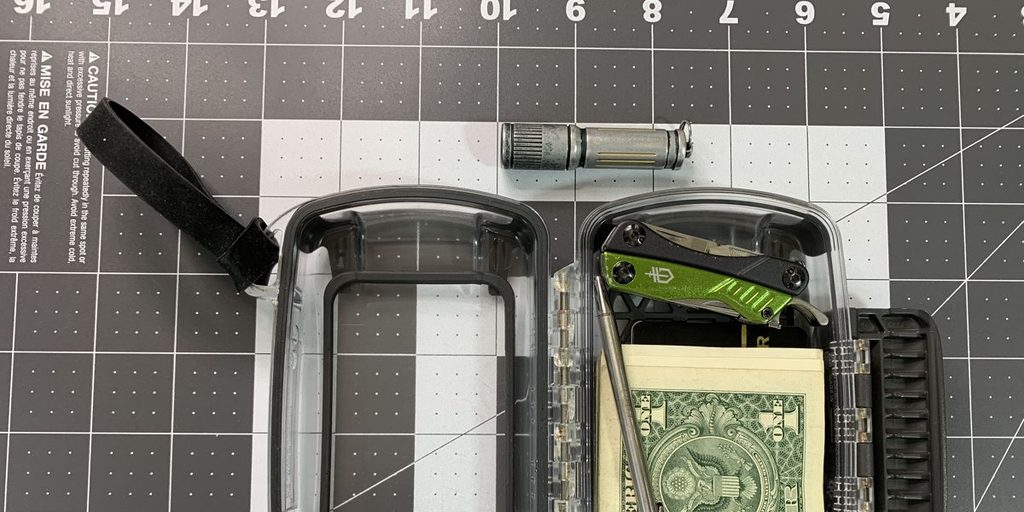
Although the outer case provides your main water protection, choosing a flashlight with its own water-resistance rating adds redundancy.
Sooner or later someone will drop it in the water or handle it with wet hands and it’s great to know that it will still work.
A 3-Inch Phone: All You Really Need
I daily carry a 3-inch phone and it’s one of the greatest inventions ever.
Today’s smartphones are large and expensive, but not entirely necessary on a trip to the beach. They’re also exactly the kind of device you don’t not want bouncing around in your pocket while you’re swimming, on a boat, or going down a water slide.
The Unihertz Jelly Star is best solution I’ve found. Rather than trying to duplicate everything your primary smartphone does, think of a miniature phone primarily as a communication device.
I get a solid 2 days of battery life after I deGoogled it.
If the Jelly Star is too small for you, then consider the Jelly Max (5 inches) or the Tank Mini (4.3 inches). Remember that these phones may require a bigger case.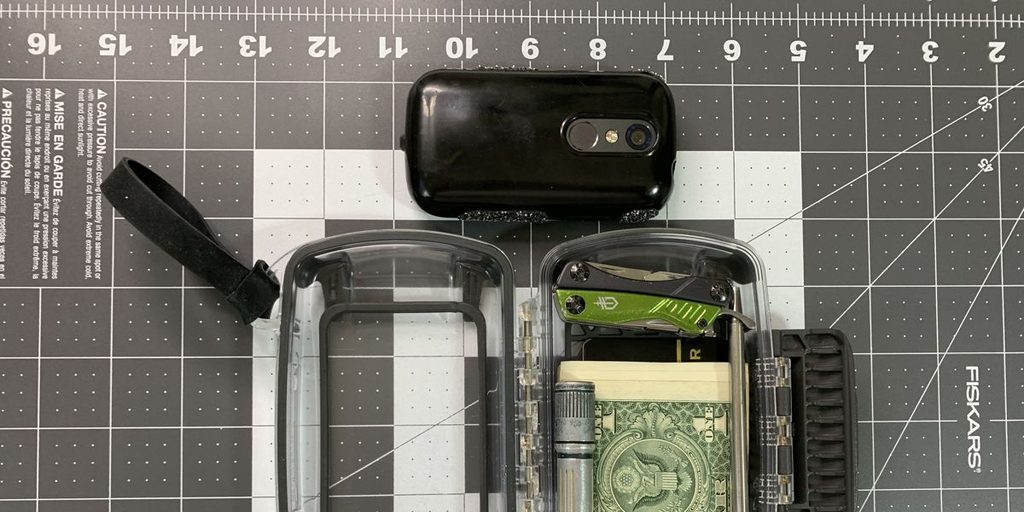
Its main jobs are calling, messaging, accessing essential information and even storing digital tickets.
Before relying on one, verify that the phone is compatible with your mobile carrier and the networks available where you’ll be using it.
Tiny phones can involve compromises in camera quality, typing, navigation, app compatibility, and overall usability. That’s acceptable if you treat the device as a specialized backup rather than a replacement for your everyday smartphone.
This is a device that you can take with you on outdoor adventures, while you leave your regular smartphone in your truck or hotel room.
Before your trip, add your contacts, verify that calls and messages work, charge the battery, and store any critical information you might need offline.
The objective isn’t to carry a miniature entertainment center. It’s to provide basic communication that fits into your dry box.
Padding the Kit
Once you’ve selected everything, there’s one more thing that you may want to consider…padding.
If it seems like your stuff is bouncing around too much, then put in a small cloth to keep things in place.
You can use an eyeglass cleaning cloth or something similar for padding.
An added benefit is now you also have a way to clean your sunglasses or the lens on your phone camera.
This could almost be considered a replacement for a bandana.
Almost.
Now Take Action
This information is useless unless you actually take action on it.
So if this idea would be useful in your life, start by buying the waterproof case.
You can go to a local camping supply store or hardware store and see what they have.
If you don’t have access to one of these stores, then you can shop on Amazon or eBay.
Once you find a case, it’s much easier to see the vision of what could go in it, which will get you excited to continue.
Go for it.